Historic Cincinnati housing architecture, especially the Victorian frame homes in Northside and brick rowhouses in Over-the-Rhine, presents distinct thermal remediation challenges. Unlike drywall construction,…
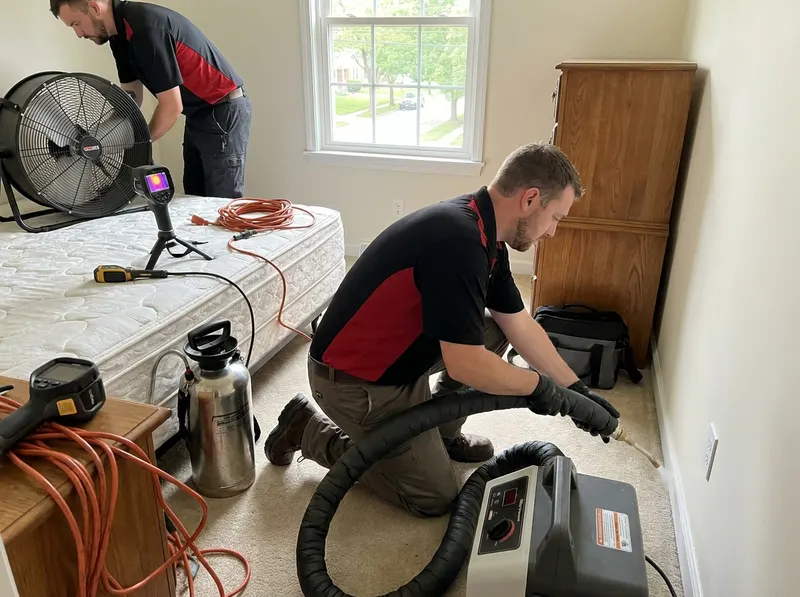
Historic Cincinnati housing architecture, especially the Victorian frame homes in Northside and brick rowhouses in Over-the-Rhine, presents distinct thermal remediation challenges. Unlike drywall construction, multi-layered lath and plaster walls hold dense thermal mass that can shield bed bugs from sub-par heating efforts. The protocol raises ambient room air between 120°F and 135°F using industrial forced-air convection, aligning with research from the Michigan State University Extension confirming that adult bed bugs and their eggs denature at 118°F sustained for 90 minutes. Technicians place digital thermocouple probes behind baseboards and inside closet cavities to confirm every cold spot reaches lethal thresholds before cycling down.
While forced heat eliminates active nymphs and adults on contact, thermal treatment alone leaves zero residual defense. Heat-treated rooms risk immediate re-infestation if insects migrate through structural wall voids or shared plumbing chases common to rental units in Clifton and Walnut Hills. Ashmere Insect Solutions mitigates this gap by combining heat with targeted applications of amorphous silica dust and botanical micro-encapsulated residuals. According to standards managed by the U.S. Environmental Protection Agency and specifications outlined by the National Pest Management Association, these inorganic desiccant barriers remain active for months by degrading the insect's protective waxy cuticle upon contact without evaporating into living areas.
Preparation dictates thermal success. Prior to treatment, occupants remove heat-sensitive items including aerosol cans, wax candles, vinyl records, and oil paintings. The remediation sequence follows strict environmental checks: Step 1 involves an initial structural survey and seal of return-air vents; Step 2 establishes external generator and duct connections; Step 3 drives room temperatures to 122°F minimum; Step 4 rotates physical furniture to distribute convection flow; Step 5 deploys perimeter desiccant barriers into wall voids. For homes near Mount Adams, Hyde Park, or College Hill, this dual-method protocol prevents the repeated failures common to store-bought pyrethroid foggers, which frequently cause bed bugs to disperse deeper into floor joists rather than dying.
Every job gets a firm, written price after an on-site visit.
Tell us about your bed bug heat and residual remediation job in Cincinnati and we'll send a clear, written quote, usually the same day.
 Ashmere Insect Solutions