Rodent activity in southwestern Ohio centers primarily on two commensal species: the Norway rat and the house mouse. According to biological data from the Centers for Disease Control and Prevention , rodents require an…
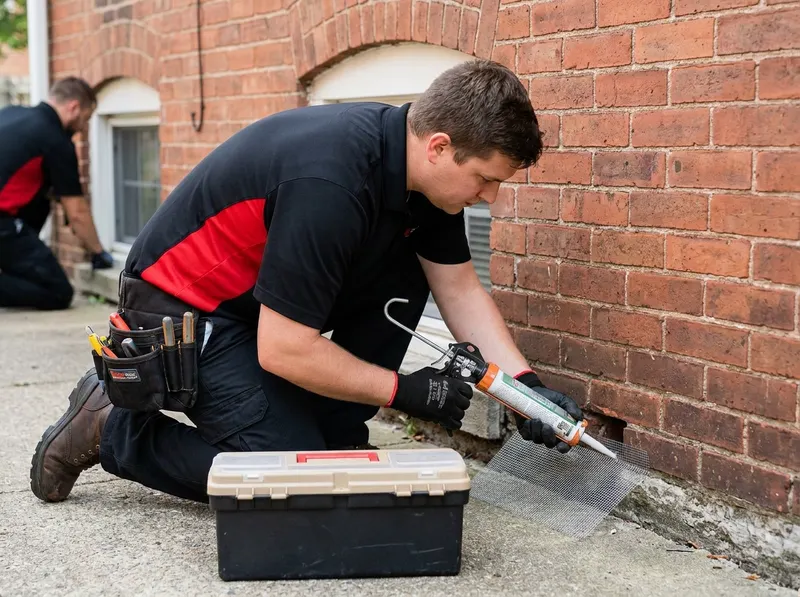
Rodent activity in southwestern Ohio centers primarily on two commensal species: the Norway rat and the house mouse. According to biological data from the Centers for Disease Control and Prevention, rodents require an opening of only 1/4 inch for mice and 1/2 inch for rats to gain structural entry into conditioned spaces. In historic neighborhoods such as Over-the-Rhine, Walnut Hills, and Mount Adams, century-old rubble stone foundations, settling sills, and aged mortar joints establish unmonitored entry pathways into crawlspaces and wall voids. Properties in Clifton and Northside frequently feature aged service penetrations where gas and plumbing conduits penetrate structural brick, creating immediate vectors toward food sources.
Ashmere Insect Solutions implements physical exclusion rather than relying on broadcast chemical rodenticides. Standard chemical bait applications frequently leave carcasses inside inaccessible joist pockets, producing severe secondary odor and insect infestations. Guidance from the Environmental Protection Agency emphasizes integrated pest management techniques that prioritize barrier defenses over chemical dependency. Technicians deploy industrial-grade galvanized steel mesh, copper mesh, silicone-urethane sealants, and custom metal flashing along rooflines, soffits, crawlspace vents, and garage door weather seals. For structural guidelines, technicians reference standard building enclosure metrics from the U.S. Department of Housing and Urban Development and pestproofing specifications from the National Pest Management Association.
Homeowners in tree-canopied sectors like Hyde Park, Mount Lookout, and College Hill routinely encounter roof-line breaches caused by overhead limbs facilitating mouse access to attic eaves. Our operational process resolves both entry points and established nests through methodical phases:
Deciding between routine trap-setting and full-envelope exclusion involves balancing immediate disruption against permanent containment. Interior trapping alone removes the current rodent population within 5 to 10 days, but leaving the architectural envelope open guarantees re-infestation within the same seasonal cycle, as documented by the Ohio Department of Agriculture. Whole-structure exclusion requires an upfront investment in carpentry and mason sealing, but eliminates perpetual monthly maintenance costs. Field protocols adhere strictly to technical manuals published by the Ohio State University Extension, wildlife handling standards established by the Ohio Division of Wildlife, and general structural sanitation regulations enforced by Cincinnati Public Health. Property owners coordinate direct service consultations by calling (513) 812-8078.
Every job gets a firm, written price after an on-site visit.
Tell us about your comprehensive rodent control and exclusion job in Cincinnati and we'll send a clear, written quote, usually the same day.
 Ashmere Insect Solutions