Managing Blattella germanica infestations in historic Cincinnati housing requires addressing architectural aggregation sites. In multi-family brick structures across Over-the-Rhine and Walnut Hills, shared plumbing…
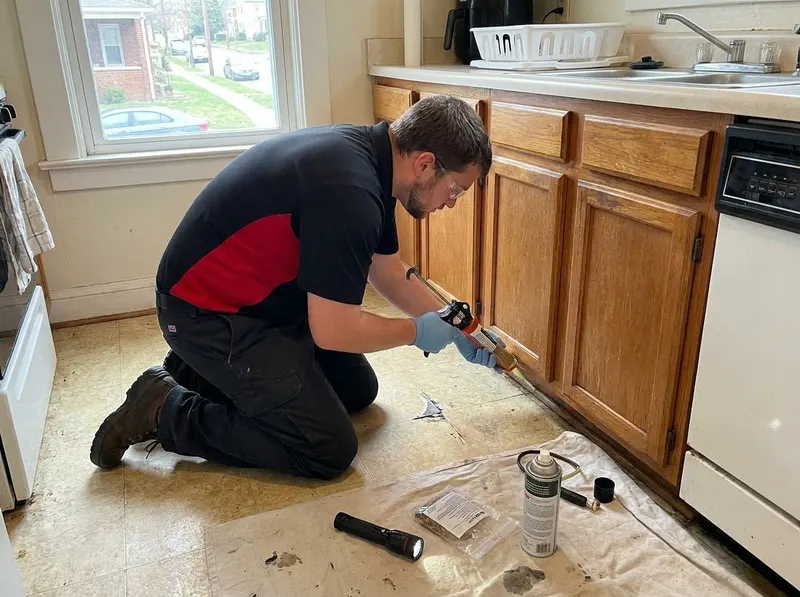
Managing Blattella germanica infestations in historic Cincinnati housing requires addressing architectural aggregation sites. In multi-family brick structures across Over-the-Rhine and Walnut Hills, shared plumbing chases and lath-and-plaster wall voids allow roaches to migrate between units. The life cycle documented by the University of Florida Entomology Department confirms that a single female carries an ootheca containing 30 to 48 eggs, producing up to 6 generations annually in heated indoor spaces. Synthetic pyrethroid foggers scatter these aggregations deeper into baseboards and cabinetry, worsening structural infiltration. Ashmere Insect Solutions isolates colonies through targeted crack-and-crevice cleanouts rather than broadcast fogging, preserving indoor air quality for homes in Northside and Clifton.
Treatment plans adhere to structural pest guidelines from the US Environmental Protection Agency Integrated Pest Management standards. Kitchen appliances, including compressor coils behind refrigerators and motor housings in dishwashers, generate localized heat between 80°F and 90°F where nymphs congregate. Technicians use HEPA-filtered vacuum extraction to physically remove visible adults, dead aggregations, and frass, lowering the allergen load recognized by the American Academy of Allergy, Asthma & Immunology. Following extraction, low-toxicity gel baits containing active ingredients such as indoxacarb or fipronil are placed in micro-dots near hinge points and plumbing penetrations, avoiding surfaces accessible to children or pets.
Eradication sequences follow strict technical protocols across 4 structured phases:
The structural difference between single-family residences in Hyde Park or Mount Lookout and mixed-use properties near Findlay Market dictates treatment scope. Older residential units with unsealed moisture points around cast-iron waste stacks require supplemental barrier sealing alongside chemical placement. Technicians monitor environmental metrics defined by the Centers for Disease Control and Prevention Healthy Homes Program, as unaddressed pipe leaks under sinks neutralize bait efficacy by providing competing water sources. The structural defense process combines juvenile hormone analogs regulated under the Ohio Department of Agriculture Pesticide Division with precise bait replenishment cycles, ensuring nymphs failing to ingest bait still cannot reproduce.
In suburban housing styles like College Hill or Pleasant Ridge, infestations often remain confined to isolated culinary appliances or pantries. Choosing spot-baiting fits minor introductions from grocery shipments or corrugated cardboard boxes; whole-kitchen mechanical cleanouts suit chronic populations established behind sink splashboards. Chemical trade-offs remain absolute: broad-spectrum aerosol sprays offer fast knockdown but trigger bait aversion and population dispersal, whereas slow-acting metabolic toxins require 7 to 14 days to circulate through the colony via coprophagy and necrophagy, delivering permanent elimination. Structural standards outlined by the National Pest Management Association inform all inspection thresholds. Technicians evaluate property parameters on-site before issuing final written clearance parameters, verifying that all utility lines crossing between walls receive physical exclusion foam compliant with OSHA General Industry Safety Standards and local building housing codes in Hamilton County. Confirmation of service scope or technical inquiries can be directed to (513) 812-8078.
Every job gets a firm, written price after an on-site visit.
Tell us about your german cockroach cleanout and baiting job in Cincinnati and we'll send a clear, written quote, usually the same day.
 Ashmere Insect Solutions